



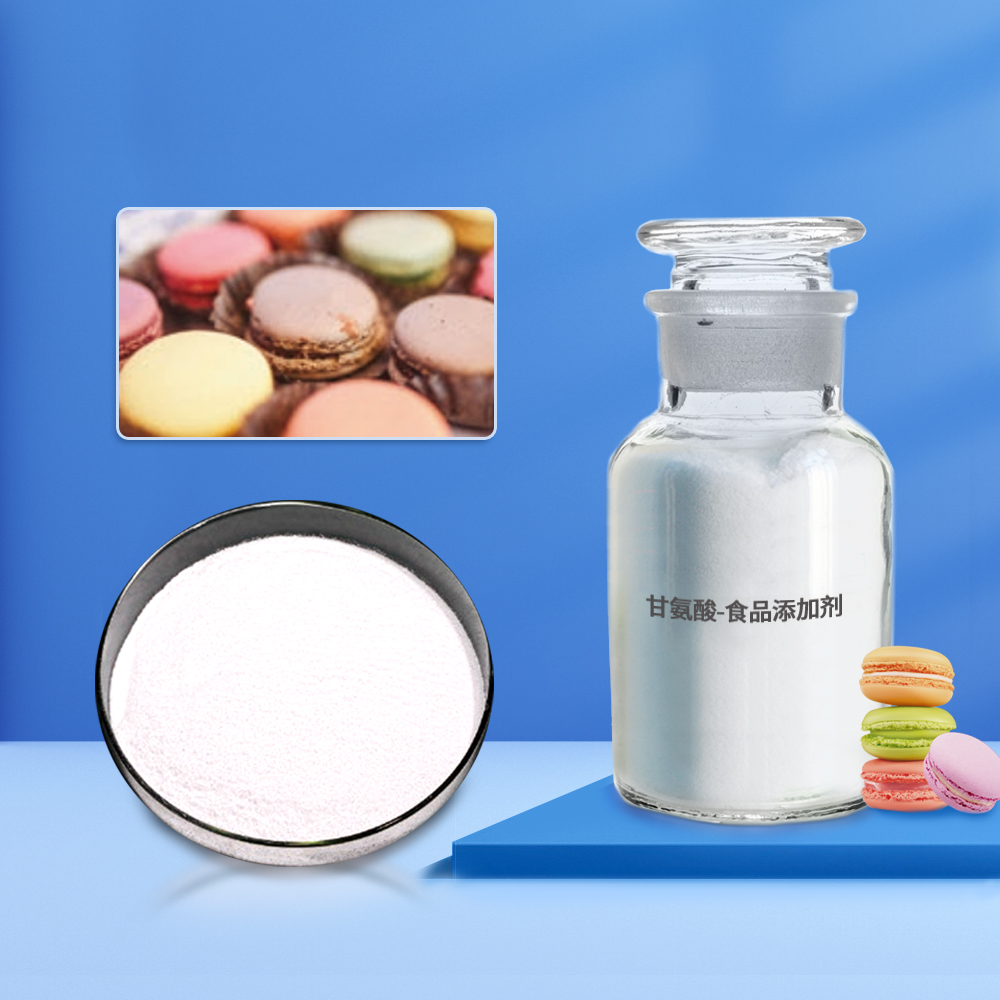
Glycine – Food Additive
Mainly used as a flavor enhancer, sweetener, and nutritional supplement.
Packing:
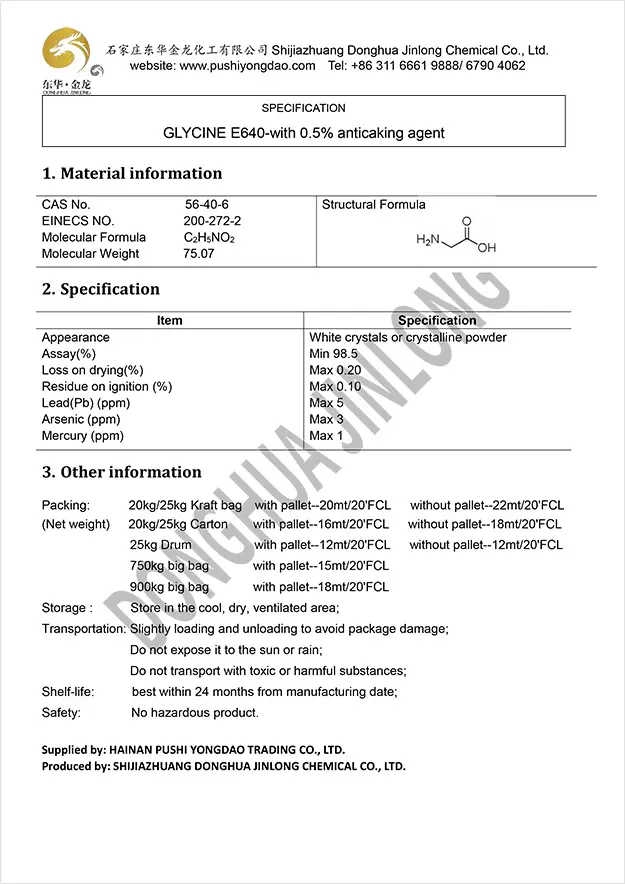
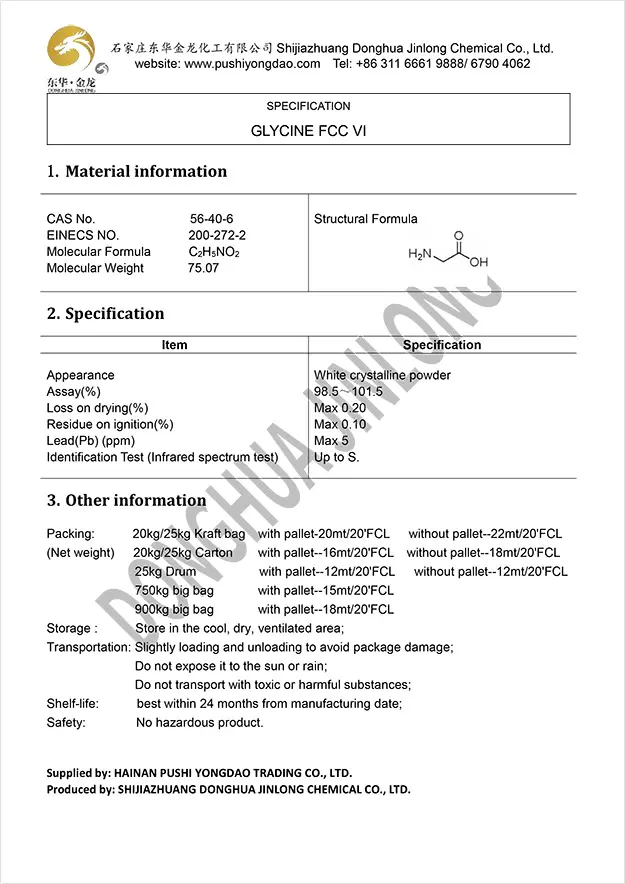
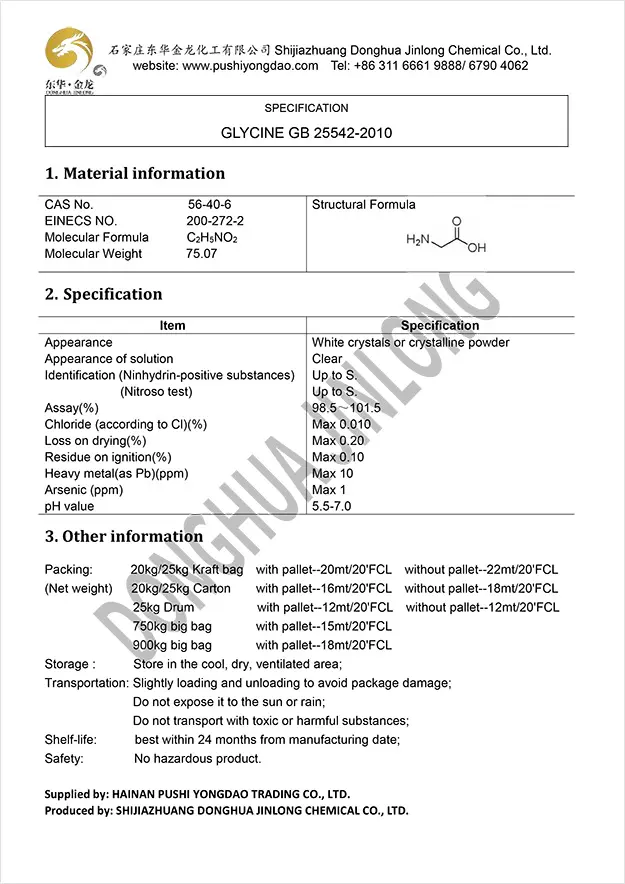
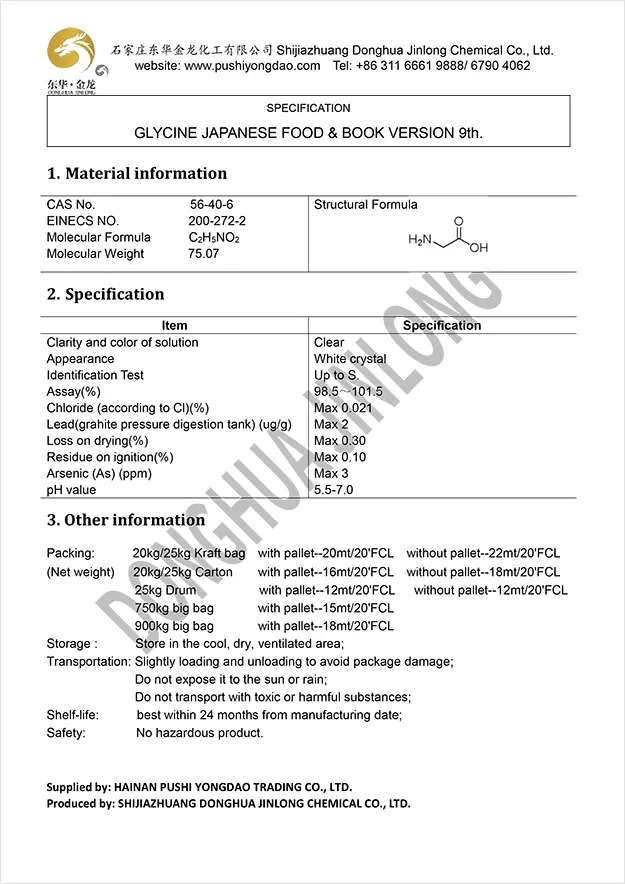
25kg/ 500kg /750kg /900kg /bag 25kg /drum /carton
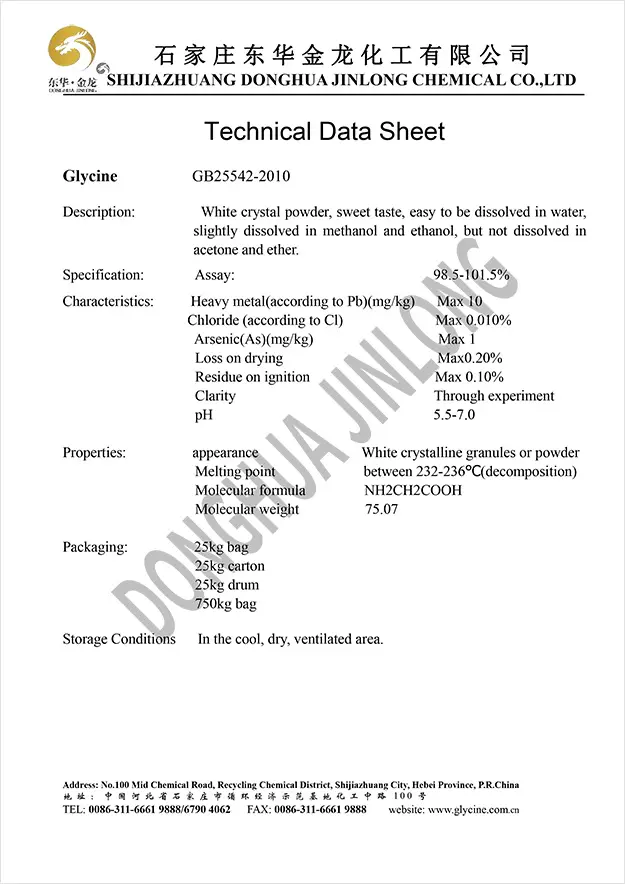
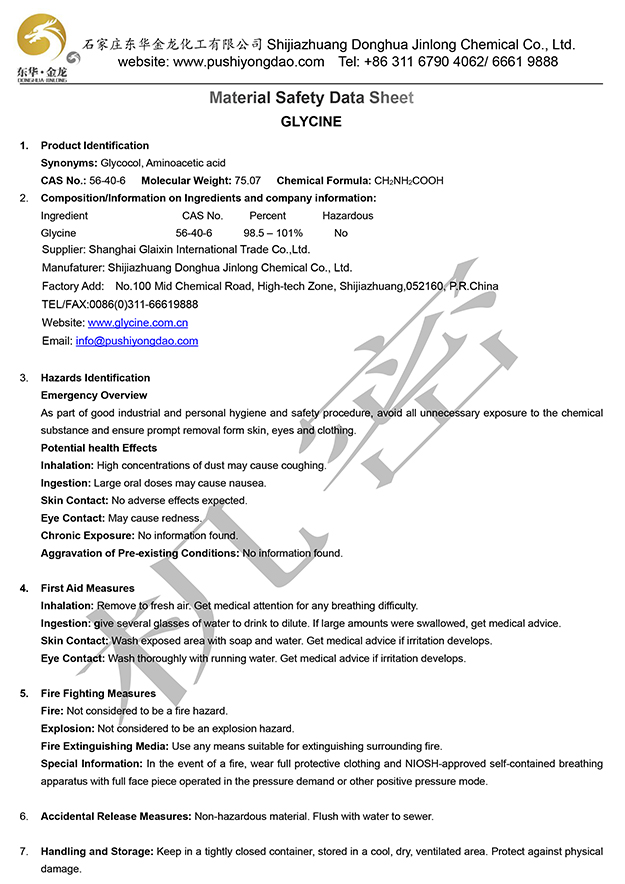
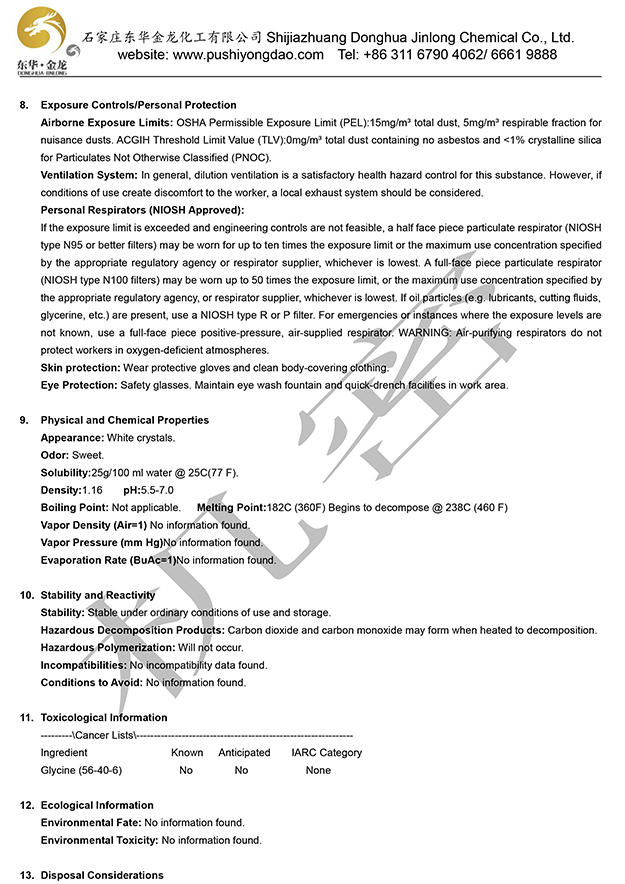
CAS no:
56-40-6
Country of origin:
Shijiazhuang of Hebei China
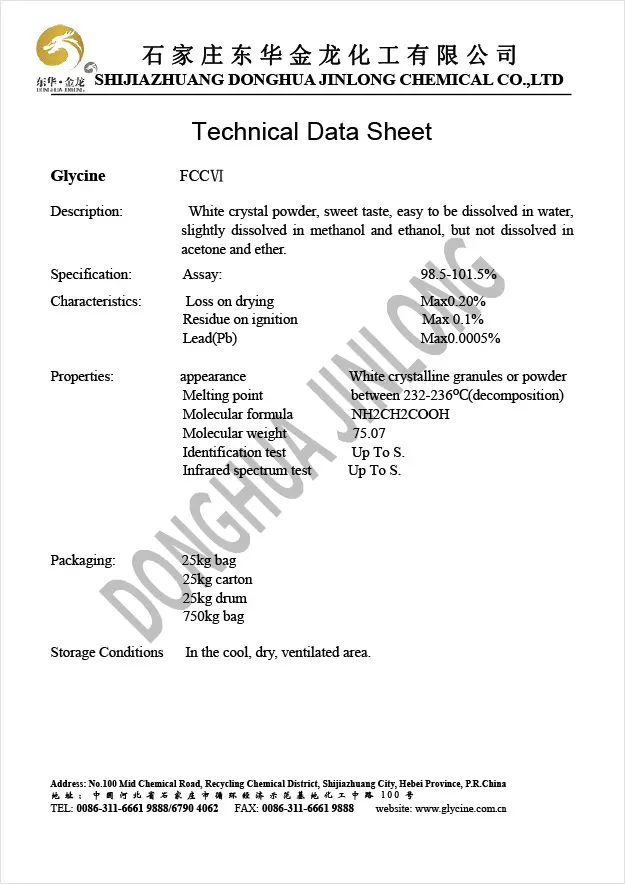
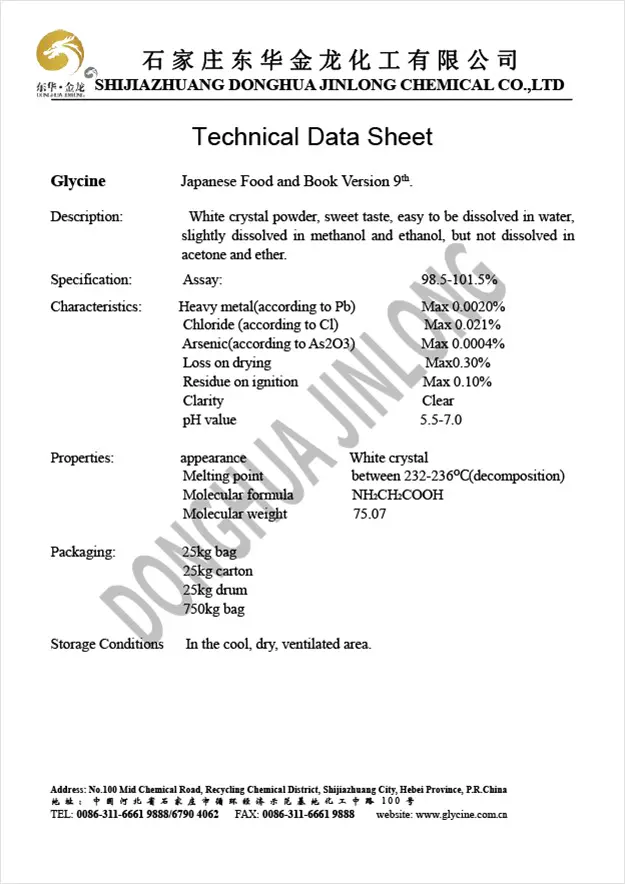
Standard:
GB/FCC/E640/AJI
Category:
glycine
Product Characteristics:
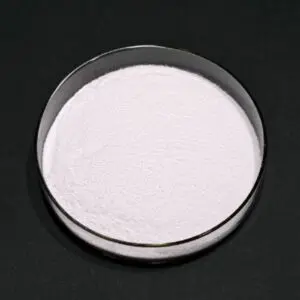
- White crystalline granules or powder with a sweet taste.
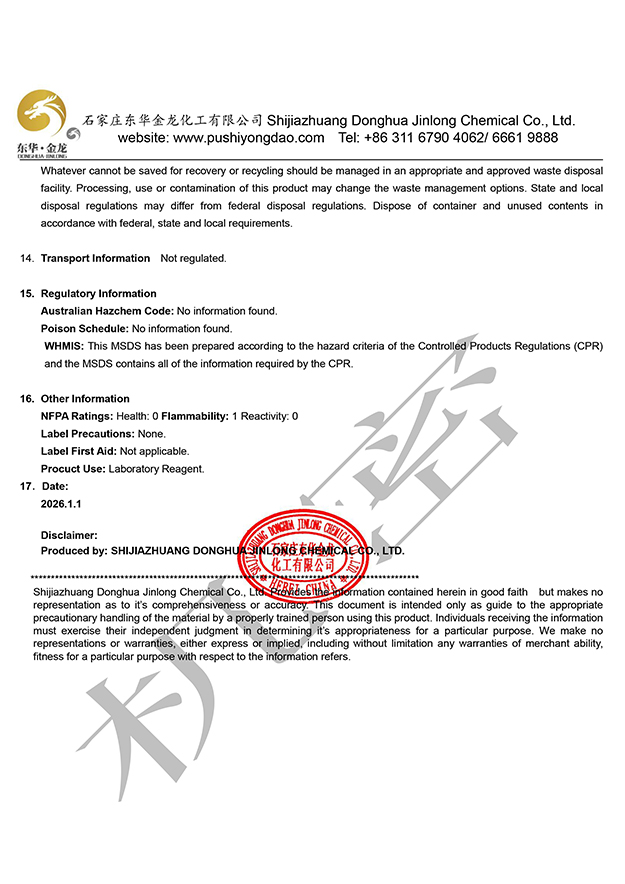
- Relative density: 1.1607; melting point: 248°C (decomposes).
- Easily soluble in water; slightly soluble in methanol; very sparingly soluble in ethanol; almost insoluble in acetone and diethyl ether.
Food Applications:
- Used as a flavoring agent, sweetener, and nutritional supplement;
- Used in combination with DL-alanine, citric acid, and similar substances in alcohol-containing beverages;;
- Serves as an acidity corrector and buffering agent during the synthesis of sake;
- Used as an additive during the preparation of pickles, sweet bean paste, soy sauce, vinegar, and fruit juices to enhance flavor and taste, preserve original characteristics, serve as a source of sweetness, and for other purposes.
- Adding this to butter, cheese, or margarine can extend their shelf life by 3 to 4 times.
- It exerts a certain inhibitory effect on the proliferation of *Bacillus subtilis* and *Escherichia coli*; therefore, it can be utilized as a preservative in surimi products, peanut butter, and similar items, at an inclusion level of 1% to 2%.
- Glycine is a zwitterion containing both an amino group and a carboxyl group; consequently, it possesses strong buffering properties and acts as a buffer for the taste sensations associated with substances such as table salt and vinegar.
- Inclusion rate for processed meat products and heat-treated meat products: 3 g/kg;
- The recommended addition level is 0.3%–0.7% for salted products and 0.05%–0.5% for pickled products.